
Call us now :08045477602
 Send Inquiry
 Send Inquiry
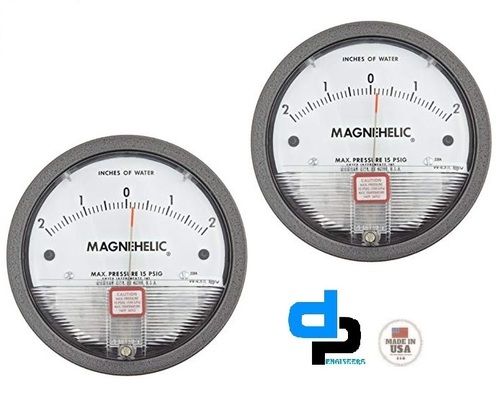
Dwyer 2005D Magnehelic Differential Pressure Gauge
MOQ : 12 Pieces
Dwyer 2005D Magnehelic Differential Pressure Gauge Specification
- Sensor Type
- Diaphragm (Mechanical Differential Pressure)
- Grade
- Industrial Grade
- Bourdon Tube
- No
- Thread
- 1/8 NPT Female
- Display
- Analog
- Outer Size
- 108 mm Diameter (Front)
- Seal Material
- Silicone Rubber Gasket
- Material
- Die-Cast Aluminum Case, Acrylic Cover
- Dial Material
- White Aluminum with Black Markings
- Pointer Material
- Black Aluminum Pointer
- Processing Type
- Precision Molded Acrylic Case
- Diameter
- 4 (101.6 mm) nominal
- Glass Size
- 4 (acrylic lens)
- Mount Type
- Surface / Panel Mount
- Scale Range
- 0-0.5 inches of water (in. w.c.)
- Accuracy
- 2% of full scale
- Accessories
- Mounting Bracket, Screws, Two Static Pressure Tips, Two 1/8 NPT Plugs, Rubber Grommets, Instructions
- IP Rating
- IP54 (Dust and Splash Resistant)
- Response Time
- Immediate (mechanical)
- Connection Location
- Back and Side
- Operating Temperature Range
- -7C to 60C (20F to 140F)
- Maximum Pressure
- 25 PSI (1.7 bar)
- Zero Adjustment
- External Screw on Front
- Mounting Orientation
- Vertical
- Weight
- Approx. 400 grams
- Model Number
- 2005D
Dwyer 2005D Magnehelic Differential Pressure Gauge Trade Information
- Minimum Order Quantity
- 12 Pieces
- FOB Port
- Delhi
- Payment Terms
- Cash on Delivery (COD), Cash Against Delivery (CAD), Cash Advance (CA), Cash in Advance (CID)
- Supply Ability
- 1 Piece Per Day
- Delivery Time
- 1-2 Days
- Sample Available
- No
- Main Export Market(s)
- Asia, Middle East
- Main Domestic Market
- All India
About Dwyer 2005D Magnehelic Differential Pressure Gauge
Dwyer 2005D Magnehelic Differential Pressure Gauge
Select the Magnehelic gage for high accuracy--guaranteed within 2% of full scale--and for the wide choice of 81 models available to suit your needs precisely. Using Dwyer's simple, frictionless Magnehelic gage movement, it quickly indicates low air or non-corrosive gas pressures--either positive, negative (vacuum) or differential. The design resists shock, vibration and over-pressures. No manometer fluid to evaporate, freeze or cause toxic or leveling problems. It's inexpensive, too. The Magnehelic gage is the industry standard to measure fan and blower pressures, filter resistance, air velocity, furnace draft, pressure drop across orifice plates, liquid levels with bubbler systems and pressures in fluid amplifier or fluidic systems. It also checks gas-air ratio controls and automatic valves, and monitors blood and respiratory pressures in medical care equipment.
Product Highlights
- Bezel provides flange for flush mounting in panel.
- Clear plastic face is highly resistant to breakage. Provides undistorted viewing of pointer and scale.
- Precision litho-printed scale is accurate and easy to read.
- Red tipped pointer of heat treated aluminum tubing is easy to see. It is rigidly mounted on the helix shaft.
- Pointer stops of molded rubber prevent pointer over-travel without damage.
- "Wishbone" assembly provides mounting for helix, helix bearings and pointer shaft.
- Jeweled bearings are shock-resistant mounted; provide virtually friction-free motion for helix. Motion damped with high viscosity silicone fluid.
- Zero adjustment screw is conveniently located in the plastic cover, and is accessible without removing the cover. O-ring seal provides pressure tightness.
- Helix is precision made from an alloy of high magnetic permeability. Mounted in jeweled bearings, it turns freely, following the magnetic field to move the pointer across the scale.
- Calibrated range spring is flat spring steel. Small amplitude of motion assures consistency and long life. It reacts to pressure on diaphragm. Live length adjustable for calibration.
- Silicone rubber diaphragm with integrally molded O-ring is supported by front and rear plates. It is locked and sealed in position with a sealing plate and retaining ring. Diaphragm motion is restricted to prevent damage due to overpressures.
- Die cast aluminum case is precision made and iridite-dipped to withstand 168 hour salt spray corrosion test.
- Exterior finished in baked dark gray hammerloid. One case size is used for all standard pressure options, and for both surface and flush mounting.
Overpressure Protection
Blowout plug is comprised of a rubber plug on the rear which functions as a relief valve by unseating and venting the gage interior when over pressure reaches approximately 25 PSIg (1.7 bar). To provide a free path for pressure relief, there are four spacer pads which maintain 0.023" clearance when gage is surface mounted. Do not obstruct the gap created by these pads. The blowout plug is not used on models above 180" of water pressure, medium or high pressure models, or on gages which require an elastomer other than silicone for the diaphragm. The blowout plug should not be used as a system overpressure control. High supply pressures may still cause the gage to fail due to over pressurization, resulting in property damage or serious injury. Good engineering practices should be utilized to prevent your system from exceeding the ratings or any component.
O-ring seal for cover assures pressure integrity of case. Samarium Cobalt magnet mounted at one end of range spring rotates helix without mechanical linkages.
- Range 0-5.0 in H2O
- 0-1.25 kPa
Precision Construction for Reliable Measurements
The Dwyer 2005D Magnehelic Differential Pressure Gauge is crafted with a precision molded acrylic case and a die-cast aluminum body, ensuring lasting performance. Its diaphragm-based mechanical sensor ensures instant response, while the analog dial with black markings provides clear readings at a glance.
Versatile Mounting and Easy Installation
Designed for flexibility, this gauge supports both surface and panel mounting orientations. With back and side connection locations and included mounting hardware, setup is straightforward-ideal for integrating into panels or using as a standalone instrument.
Built for Industrial Demands
Boasting an IP54 rating, this gauge resists dust and splashing liquids, suitable for steam, oil, and gas measurement. The rugged housing, silicone rubber gasket, and powder-coated finishing ensure the gauge withstands challenging environments and frequent handling.
FAQ's of Dwyer 2005D Magnehelic Differential Pressure Gauge:
Q: How do I install the Dwyer 2005D Magnehelic Differential Pressure Gauge?
A: The gauge can be installed using the provided mounting bracket and screws, supporting both surface and panel mount orientations. Connections can be made at the back or side using the included static pressure tips and 1/8" NPT female threads.Q: What substances can this pressure gauge measure?
A: This model is designed to measure the differential pressure of steam, oil, and gas, making it ideal for industrial applications involving these media.Q: When should I perform zero adjustment on the gauge?
A: Zero adjustment should be performed after installation or if the gauge shows deviation from zero when no pressure is applied. The external screw on the front makes recalibration straightforward and accessible.Q: Where should the Dwyer 2005D be mounted for optimal performance?
A: It should be mounted vertically, as specified in the operating guidelines, to maintain measurement accuracy and ensure proper function.Q: What is the benefit of the IP54 protection rating?
A: The IP54 rating means the gauge is protected against limited dust ingress and water splashes, enhancing its reliability and lifespan in challenging industrial settings.Q: How quickly does the gauge respond to pressure changes?
A: Thanks to its mechanical diaphragm sensor, the gauge provides immediate response to changes in differential pressure, ensuring timely and accurate readings.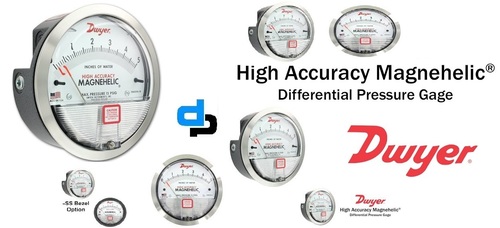
Tell us about your requirement

Price:
Quantity
Select Unit
- 50
- 100
- 200
- 250
- 500
- 1000+
Additional detail
Mobile number
Email

More Products in Sensocon - Dwyer S2000 Pressure Gauge Category
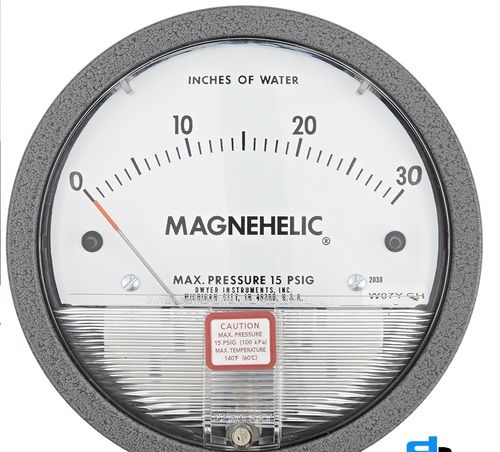
Dwyer USA Magnehelic Gauges 0 To 30 MM WC
Price 10500 INR / Piece
Minimum Order Quantity : 12 Pieces
Pointer Material : Aluminum
Glass Size : Full view, clear acrylic lens
Sensor Type : Differential Pressure Gauge
Accuracy : 2% of Full Scale
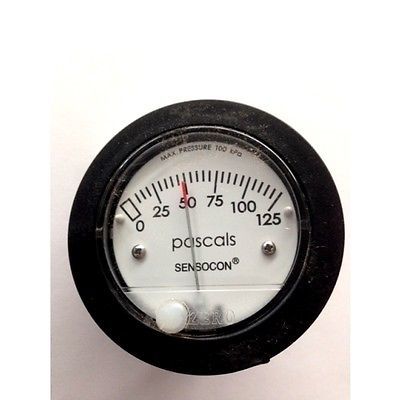
Dwyer USA Magnehelic Gauges 0 To 125 MM WC
Price 9500 INR / Piece
Minimum Order Quantity : 12 Pieces
Pointer Material : Other, Aluminum Pointer
Glass Size : 4 inches Approximate Viewing Diameter
Sensor Type : Diaphragm
Accuracy : 2% of Full Scale
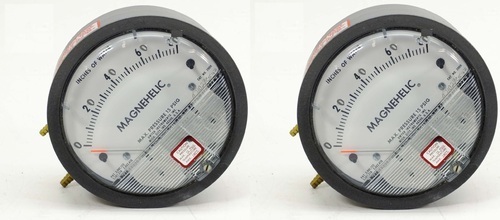
Dwyer USA Magnehelic Gauges 0 To 80 MM WC
Price 12800 INR / Piece
Minimum Order Quantity : 12 Pieces
Pointer Material : Other, Highimpact plastic
Glass Size : Clear acrylic lens, full dial
Sensor Type : Mechanical Differential Pressure Sensor
Accuracy : 2% of full scale
Dwyer 2300-4CM Magnehelic Differential Pressure Gauge,Range 2-0-2 CM
Minimum Order Quantity : 12 Pieces
Pointer Material : Other, Red Acrylic
Glass Size : 4 inch (Full Face Acrylic Window)
Sensor Type : Differential Pressure Sensor
Accuracy : 2% of Full Scale

 Send Inquiry


Our Products
- Series DX |Wet/Wet Differential Pressure Switch-
- Top ahu filter suppliers manufacturers in india
- Moisture Separator Filter Manufacturers & Supplier
- Wire Mesh Filter
- Pocket Filter
- Hydraulic Oil Filters - Manufacturers & Suppliers in India | D.P.Engineers
- Triveni Turbine Elements Filter- D.P.ENGINEERS
- Volume Control Damper
- HVAC Filters
- Sisw Centrifugal Blower-Centrifugal Blower
- ADH Nicotra Forward Curved Centrifugal Fan
- Centrifugal Blower - Centrifugal Blowers Manufactu
- Industrial Impeller Manufacture IN,DELHI,NCR,India
- DIDW Forward Curved Fan
- Series RDH Nicotra Backard Curved Centrifugal Fan-
- Centrifugal Blower
- Aluminium Impeller
- Caryaire Inline Fan -Circular Inline Fan - Wholesa
- Air Washer Units
- AC Aluminium Grill
- Air Conditioning Duct
- Air Handling Units
- Air Conditioning Diffuser
- Duct Damper
- Fan Coil Unit
- Leading Supplier Of AHU (Air Handling Unit) Filter from Delhi-NCR-India-Mumbai-Kolkata-Gurajat-Noida-Bangalore-Faridabad-Gurgaon
- Dust Collector Filter Bag
- Cooling And Condenser Coils
- Galaxy Magnehelic Gauge Wholesale Suppliers India
- TOP Dwyer Magnehelic Gauge Wholesale Suppliers India
- Magnehelic Gauge Nozzle Manufacturer In India
- Series TFP-GI Gas Turbine Flow Meter - Dwyer Instr
- GEMTECH Wholesale Pressure Gauge in india | Delh
- Winters Pressure Transmitter Wholesalers|India-Del
- Sensocon-Series 212 Weatherproof Pressure Transmit
- Series RHP Temperature/Humidity Transmitter DWYER
- Galaxy Differential pressure|Dealers|Distbutors|wh
- Series 211 - Differential Pressure Transmitter - D
- Dwyer Instruments Appoints DP ENGINEERS as Distrib
- Galaxy Differential Pressure Gauge Wholesale Gandh
- Series G2000 Galaxy Differential Pressure Gauges Dealers Wholesaler from Delhi|NCR|India|Faridabad|Noida|Ghaziabad|Gurgaon|Bulandshahr|Ballabhgarh|Bahadurgarh|Dehradun|Haridwar|Udham Singh Nagar
- SENSOCON Differential Pressure Gauges Dealers Wholesaler for Delhi|NCR|India|Faridabad|Noida|Ghaziabad|Gurgaon|Bulandshahr|Ballabhgarh|Bahadurgarh|Dehradun|Haridwar|Udham Singh Nagar
- Series S2000 GEMTECH Differential Pressure Gauges|Dealers |Distbutors|wholesale in,Ambala,Chandigar
- Series S2000 GEMTECH Differential Pressure Gauges|Dealers Wholesaler from Delhi|NCR|India|Faridabad|Noida|Ghaziabad|Gurgaon|Bulandshahr|Ballabhgarh|Bahadurgarh|Dehradun|Haridwar|Udham Singh Nagar
- DPG 200 Digital Pressure Gage Dwyer
- DWYER Pressure Switch
- Magnehelic Gauge In Mumbai (Bombay) - Dealers & Tr
- series 2-5000 | minihelic ii differential pressu
- Differential Pressure Gauge Series S-5000 Sensocon
- Dwyer 1950Explosion Proof Differential Pressure Switch| Delhi| NCR|India-D.P.ENGINEERS
- Differential Pressure Gauge Series Sz-5000 sensoco
- Setra USA -Models 265 Differential Pressure Transd
- Series A3000 Photohelic Pressure Switch/Gage
- Series 3000MR/3000MRS | Photohelic Switch
- Axial Flow Fan
- Galaxy Differential Pressure Gauges Dealers Wholes
- Dwyer Magnehelic Gauges Series 2000 - D.P.ENGINEER
- Dwyer Mark II | Moded Plastic Manometer
- 1900 Compact Low Differential Pressure Switch -D.P
- Series 1620 Single and Dual Pressure Switch Wholes
- Dwyer 616KD differential pressure transmitter whol
- GEMTECH Differential Pressure Gauge Wholesalers |Dealers Wholesaler from Delhi|NCR|India|Faridabad|Noida|Ghaziabad|Gurgaon|Bulandshahr|Ballabhgarh|Bahadurgarh|Dehradun|Haridwar|Udham Singh Nagar
- Wet Differential Pressure Transmitter-Series251-DP
- DM-1000 Digital Differential Pressure
- Best Supplier GEMTECH Differential Pressure Gauge | D.P.ENGINEERS DELHI
- Sensocon - Dwyer S2000 Pressure Gauge
- Series 211sensocon differential pressure transmitt
- Huba Switzerland Pressure Transmitter
- SUPER SELLER DWYER MAGNEHELIC DIFFERENTIAL PRESSURE GAUGE ALL INDIA
- 43000 Capsu Photohelic Pressure Dwyer
- Series S2000 SENSOCON Differential pressure|Dealers |Distbutors|wholesale in,Ambala,Chandigarh,Baddi,Nalagarh,Solan,Jharmajri Road,Barotiwala,Paonta Sahib,Himanchal Pradesh| D.P.ENGINEERS
- Differential Pressure Transmitter-Sensocon USA
- DPG Digital Pressure Gauges Winters Instruments
- Huba Differential Pressure Switch
- Series MS| Magnesense Differential Pressure Tran
- Clean Room Equipments
- HEPA Filters
- AHU Filters-Manufacturers,Suppliers & Exporters in
- AHU Filter Manufacturers - Industrial Air Filters
- Pharmaceutical Sparkler Filter
- DC motor filters - Panel Air Filters for DC Motors
- Gas Turbine Air Intake Filters
- AHU Fine Filter| Industrial AHU Fine Filter MANUFA
- Fine Filter|AHU Filter Manufacturers|Industrial Ai
- Ductable Unit Pre Filter Manufacturers|India Delhi
- Evaporative Cooling Pad Manufacturers in India
- Cooling Tower Sprinkler Manufacturer from DELHI,NC
- Cooling Tower Spare Parts
- Pvc Drift Eliminator
- Evaporative Cooling Pad
- Evaporative Cooling Pads
- Series- AT-S Nicotra Forward Curved Centrifugal Fa
- Fan Impeller - blower impeller,Impeller Fan Manufa
- GI Blower Hollow Shaft Type Manufacturers in Delhi
- ACID PROOF AXIL FLOW FAN -MANUFACTURER DELHI INDIA
- Series 2000 DwyerMagnehelic Pressure Gauges Dealers Wholesaler from Delhi|NCR|India|Faridabad|Noida|Ghaziabad|Gurgaon|Bulandshahr|Ballabhgarh|Bahadurgarh|Dehradun|Haridwar|Udham Singh Nagar
- Leading Supplier Of Evaporative cellulose cooling
- Evaporative Cooling Pad Wholesales Supplier|D.P.E
- Dwyer Instruments Appoints D.P.Engineers as Distributor india |Delhi NCR|Bangalore|Mumbai|Gurajat|Kolkata
- GEMTECH Differential Pressure Gauges Dealers Wholesaler for Delhi|NCR|India|Faridabad|Noida|Ghaziabad|Gurgaon|Bulandshahr|Ballabhgarh|Bahadurgarh|Dehradun|Haridwar|Udham Singh Nagar- DP ENGINEERS
- GEMTECH INSTRUMENTS SEARCH RESULTS - D.P.ENGINEERS
- GEMTECH Differential Pressure INSTRUMENTS
- GEMTECH Differential Pressure Gauge Authorized Wholesale Dealer from D.P.ENGINEERS DELHI NCR INDIA
- Introduction Of GEMTECH INSTRUMENTS
- Product Categories | GEMTECH INSTRUMENTS
- Distributor locator - GEMTECH - Instruments
- GEMTECH Instruments PRODUCTS Shop - GEMTECH Instrument
- GEMTECH | DIFFERENTIAL PRESSURE GAUGE Authorized Wholesaler Dealer From Delhi India
- GEMTECH Instruments Distributor Wholesaler Dealer
- Home Products | GEMTECH Instruments
- GEMTECH - INSTRUCTIONS Partner - D.P.ENGINEERS IND
- GEMTECH - Instruments Distributors for India Delhi
- GEMTECH Series G2000- Differential Pressure Gauge
- Series G2-5000 Mini Differential Pressure Gauges |GEMTECH -D.P.Engineers in NCR Delhi Chennai Gujarat Mumbai,Bangalore
- GEMTECH - INSTRUMENT Mini Differential Pressure Gauge MM Water Column ( W.C. )
- GEMTECH Differential Pressure Switch Wholesaler India Delhi NCR | D.P.ENGINEERS
- Series G2-5000 GEMTECH MINI Differential Pressure Gauges Wholsaler Delhi,NCR,INDIA
- GEMTECH Differential Pressure Switch Dealers Wholesaler|Delhi|NCR|India|Bangalore|Mumbai|Kolkata
- GEMTECH SERIES 3000 DIGITAL PRESSURE GAUGE WHOLESALER Delhi,NCR INDIA
- GEMTECH 3000 DIGITAL PRESSURE GAUGE MBAR - wholesale Distribution Mumbai Gujarat Bangalore
- GEMTECH SERIES 3000 DIGITAL PRESSURE GAUGE PASCAL wholesalers Dealers Delhi NCR INDIA
- GEMTECH 3000 DIGITAL PRESSURE GAUGE Inch of Water Dealers Wholesaler from Delhi|NCR|India|Faridabad|Noida|Ghaziabad|Gurgaon|Bulandshahr|Ballabhgarh|Bahadurgarh|Dehradun|Haridwar|Udham Singh Nagar
- GEMTECH Instruments Appoints 3000 DIGITAL PRESSURE GAUGE MM WC Dealers Wholesaler from Delhi|NCR|India-Bahadurgarh|Dehradun|Haridwar|Udham Singh Nagar-D.P.ENGINEERS
- GEMTECH SERIES 3000 DIGITAL PRESSURE GAUGE KPA Dealers Wholesaler|Delhi|NCR|India|Bangalore|Mumbai|Kolkata-D.P.ENGINEERS
- SERIES 3000 GEMTECH DIGITAL PRESSURE GAUGE & alarm Pascal|Dealers|Wholesaler|Delhi|NCR|India|Bangalore|Mumbai|Kolkata|D.P.ENGINEERS
- Series 212 - Weather-Proof Differential Pressure Transmitter Wholesaler from Delhi|NCR|India|Faridabad|Noida|Ghaziabad|Gurgaon|Bulandshahr|Ballabhgarh|Bahadurgarh|Dehradun|Haridwar|Udham Singh Nagar
- GEMTECH Series G2000 Differential Pressure Gauges wholesalers in Hospitality pharmaceutical industries india
- Air Washer Cooling Pad Manufacturer Wholesale Suppliers in India
- Dwyer Series MSX Magnesense Differential Pressure Transmitter wholesalers in DELHI NCR INDIA
- Dwyer Series MSX Magnesense Differential Pressure Transmitter wholesale IN DELHI NCR INDIA
- Magnehelic Differential Pressure Gauge Dual Scale wholesale in DELHI,NCR ,INDIA
- GEMTECH Differential Pressure Switch Wholesaler In
- Sensocon Series 211 - Differential Pressure Transm
- Sensocon Series 211 Differential Pressure Transmit
- Huba Control Online - Pressure Transmitter 528 - D.P.ENGINEERS IN DELHI
- Top Wholesalers GEMTECH Differential Pressure Gauges Online | D.P.ENGINEERS
- DWYER OMEGA Instruments Distributors Wholesaler In India
- Star Supplier of Gemtech Differential Pressure Gau
- Industry Leaders of GEMTECH Differential pressure
- Industry Leaders Supplier GEMTECH_Differential Pressure Gauge India Delhi NCR
- Popular GEMTECH Differential Pressure Gauge Dealers in Delhi NCR INDIA
- GEMTECH DIFFERENTIAL PRESSURE GAUGE JHARKHAND INDUSTRIAL AREA INDIA
- "COOLING TOWER FILLS" MANUFACTURER COOLING TOWER S
- GEMTECH INSTRUMENT Mini Differential Pressure Gaug
- DC Blower Air Filter Key Manufacturers and Suppliers in DELHI NCR INDIA
- GEMTECH OMEGA Series G2000 Differential Pressure Gauges FOR SALE DELHI NCR INDIA
- Popular Brands Across Delhi, NCR,India - GEMTECH Differential Pressure Gauge wholesale in D.P.ENGINEERS
- huba 402 series - differential pressure transmitter wholesale in delhi
- Huba Switzerland Differential Pressure Switch Distributor in India
- Huba Control Differential Pressure Transmitter
- jiss galaxy differential pressure gauge wholesale delhi ncr india | D.P.ENGINEERS
- BEST Manufacturers in Round DC Motor Air Filter in Delhi
- Huba Control Differential Pressure Transmitter On
- Home / Shop / Indicators & Controllers / Differential Pressure / Differential Pressure Transmitters / Huba Control 520 Pressure Transmitter
- Measurement Gauges & Gauge Fittings>Pressure Gauge >GEMTECH Differential Pressure Gauges
- Measurement Gauges & Gauge Fittings > Pressure Gauge > Magnehelic Differential Pressure Gauges
- Series 616KX Differential Pressure Transmitter wholesalers | D.P.ENGINEERS 9268631221
- SS Box for Magnehelic Gauge Manufacturer,Supplier: D.P.ENGINEERS IN DELHI
- Huba Control Online Shop Delhi,NCR,INDIA ... pressure transmitter model 520.930s022401
- STAR SUPPLIER (DPN) DIFFERENTIAL PRESSURE NOZZLE ALL INDIA
- Setra Model 3100 and 3200 Pressure Transducers
- GEMS Series 3100 & 3200 Pressure Transmitter Supplier & Distributor Delhi NCR India


X/852, Chand Mohalla, Gandhi Nagar,Delhi - 110031, India

Mr Devinder Pal Sharma
(Proprietor)
Mobile :08045477602
 Send Inquiry
 Send SMS
Developed and Managed by Infocom Network Private Limited.
 English
 Spanish
 French
 German
 Italian
 Chinese (Simplified)
 Japanese
 Korean
 Arabic
 Portuguese