
Call us now :08045477602
 Send Inquiry
 Send Inquiry
Series 251 - Wet/Wet Differential Pressure Transmitter
Series 251 - Wet/Wet Differential Pressure Transmitter Specification
- Outer Size
- 85 mm Dia.
- Seal Material
- Buna-N
- Grade
- Industrial
- Sensor Type
- Wet/Wet Differential Pressure Transmitter
- Bourdon Tube
- Stainless Steel
- Thread
- 1/4 NPT (Male)
- Display
- Analog & Digital (Optional)
- Material
- Die cast aluminium
- Dial Material
- Aluminium
- Pointer Material
- Aluminium
- Processing Type
- Calibrated before dispatch
- Diameter
- 85 mm
- Glass Size
- 65 mm Diameter
- Mount Type
- Wall / Pipe Mount
- Scale Range
- 0-10 to 0-4000 mbar (Various Ranges)
- Accuracy
- ±1.0% F.S.
- Measure Pressure Of
- Air, Gases, Liquids (Non-corrosive)
- Accessories
- Mounting Bracket, Bolts, Manual
- Electrical Connection
- Terminal Block/Conduit
- Response Time
- < 100 ms
- Power Supply
- 12-36 V DC
- Explosion Proof
- Optional
- Weight
- Approx. 850 g
- IP Rating
- IP65
- Media Compatibility
- Wet-to-Wet applications
- Zero & Span Adjustment
- Adjustable on site
- Output Signal
- 4-20 mA, 2-wire
- Operating Temperature
- -10C to +60C
Series 251 - Wet/Wet Differential Pressure Transmitter Trade Information
- Payment Terms
- Cash Against Delivery (CAD), Cash Advance (CA), Cash on Delivery (COD), Cash in Advance (CID)
- Main Export Market(s)
- Asia
- Main Domestic Market
- All India
Series 251 - Wet/Wet Differential Pressure Transmitter About
Series 251 - Wet/Wet Differential Pressure Transmitter
0.25% Accuracy
316 Stainless Steel construction
1000 PSI working pressure
5:1 Turn down
Certificate of Calibration
The Series 251 wet/wet differential pressure transmitter utilizes a double diaphragm sensor technology that outperforms standard double sensor products in accuracy, reliability and static operating pressure. This differential pressure sensing technology offers 0.25% accuracy with static operating pressures up to 1000 PSI. The Series 251 features 316 stainless steel construction designed to meet NEMA 4X (IP 65) standards. The transmitter also offers exceptional field flexibility with a 5:1 turn down and comes standard with a certificate of calibration.
Model Number Range
251-01 0 - 5 PSI ( 34.5 kPa )
251-02 0 - 10 PSI ( 68.9 kPa )
251-03 0 - 15 PSI ( 103 kPa )
251-04 0 - 30 PSI ( 206.8 kPa )
251-05 0 - 50 PSI ( 344.7 kPa )
251-06 0 - 100 PSI ( 689.5 kPa )
251-07 0 - 150 PSI ( 1034 kPa )
251-08 0 - 300 PSI ( 2068 kPa )
*Other ranges available upon request.
Versatile Differential Pressure Measurement
Engineered for wet-to-wet applications, the Series 251 transmitter caters to diverse industrial needs. Its robust construction, configurable scale range, and stainless steel wetted parts ensure accurate, long-term performance in both gaseous and liquid environments. The matte/satin finished enclosure also provides aesthetic value and protective durability.
Reliable Performance and Speed
Minimizing lag in process control, the transmitter delivers precise pressure readings with a rapid response time of under 100 milliseconds. The 1.0% full-scale accuracy, combined with thorough pre-dispatch calibration, supports dependable integration into any process system, ensuring safe and efficient operations.
Easy Installation and Maintenance
Installation is simplified by the mounting bracket, clear manual, and a choice of wall or pipe mount. Zero and span can be conveniently adjusted onsite for application flexibility. The IP65 rating ensures the transmitter stands up to dust and water exposure, suiting tough industrial environments.
FAQs of Series 251 - Wet/Wet Differential Pressure Transmitter:
Q: How does the Series 251 transmitter ensure accurate differential pressure reading in wet-to-wet applications?
A: The Series 251 uses a wet/wet differential pressure sensor encased in a stainless steel bourdon tube and die-cast aluminium body. It is calibrated before dispatch and features adjustable zero and span for fine-tuning onsite, ensuring high accuracy (1.0% F.S.) even in fluid-rich environments.Q: What process does installation of this transmitter involve?
A: Installation consists of mounting the transmitter on a wall or pipe using supplied brackets and bolts, connecting process lines via 1/4 NPT male threads, wiring through terminal block or conduit, and finally, setting the zero and span adjustments as needed, guided by the included manual.Q: Where is this transmitter typically used?
A: This transmitter is widely used in industrial settings where monitoring differential pressure of air, gases, or non-corrosive liquids is essential, such as HVAC systems, filtration, and process automation, particularly in environments requiring IP65 protection and optional explosion-proofing.Q: What are the main benefits of the Series 251 IP65-rated design?
A: The IP65 rating protects the device from dust ingress and direct water jets, making the transmitter suitable for installation in harsh, dusty, or moist industrial locations, thereby enhancing its reliability and operational life.Q: When is it necessary to choose the explosion-proof option?
A: The explosion-proof variant should be selected if the transmitter is to be installed in hazardous or classified areas where ignitable gases or dust may be present, ensuring compliance with safety regulations.Q: How is output signal transmitted and integrated with control systems?
A: The transmitter provides a 420 mA output using a 2-wire connection, which is industry-standard for integration with PLCs, DCS, or remote monitoring systems. They are powered by a 12-36 V DC supply.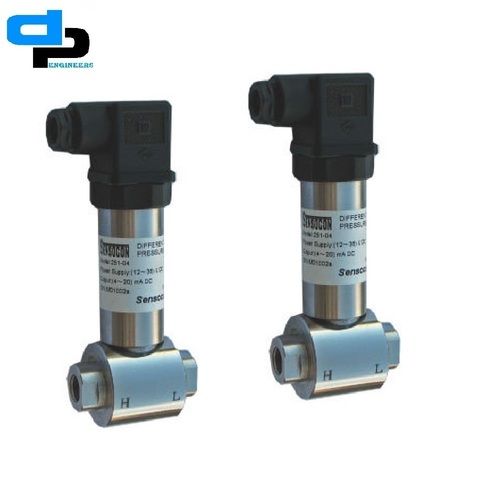
Tell us about your requirement

Price:
Quantity
Select Unit
- 50
- 100
- 200
- 250
- 500
- 1000+
Additional detail
Mobile number
Email

More Products in Wet Differential Pressure Transmitter-Series251-DP Category
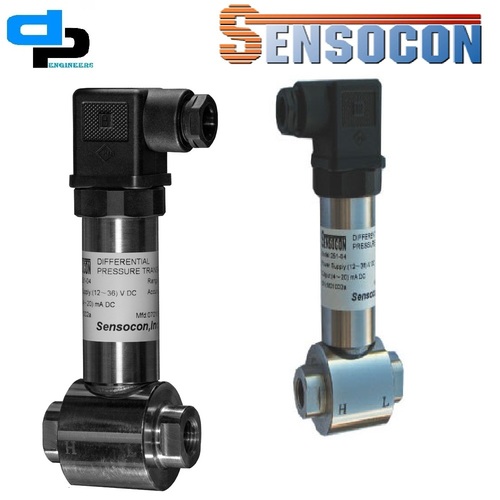
Sensocon USA Wet/Wet Differential Pressure Transmitter Series 251-06
Thread : 1/4 NPT Female
Accessories : Mounting hardware, installation manual
Processing Type : Other, Electronic sensing and signal processing
Sensor Type : Wet/Wet Differential Pressure Transmitter
Display : External digital/analog (depends on model integration, typically not local)
Material : Other, Aluminum housing, stainless steel wetted parts
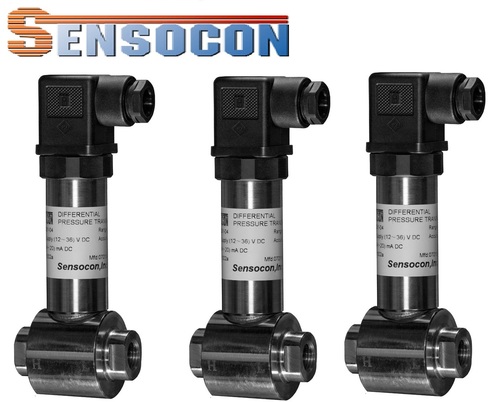
Sensocon USA Wet/Wet Differential Pressure Transmitter Series 251-04
Thread : 1/4 NPT (Female)
Accessories : Mounting hardware included, instruction manual
Processing Type : Other, Electronic Pressure Sensing
Sensor Type : Wet/Wet Differential Pressure Transmitter
Display : None (Transmitter output only)
Material : Other, Enclosure: Aluminum, Wetted Parts: Stainless Steel/Brass
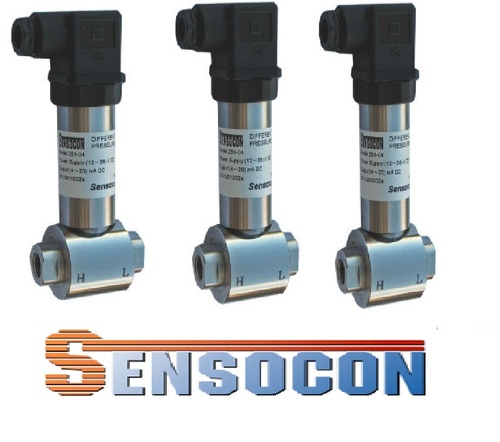
Sensocon USA Wet/Wet Differential Pressure Transmitter Series 251-03
Thread : Process Connection: 1/4 NPT Female
Accessories : Standard mounting brackets included
Processing Type : Other, Electronic (Sensorbased)
Sensor Type : Wet/Wet Differential Pressure Transmitter
Display : No display (Transmitter only)
Material : Other, Enclosure: Aluminum; Wetted Parts: Stainless Steel 316
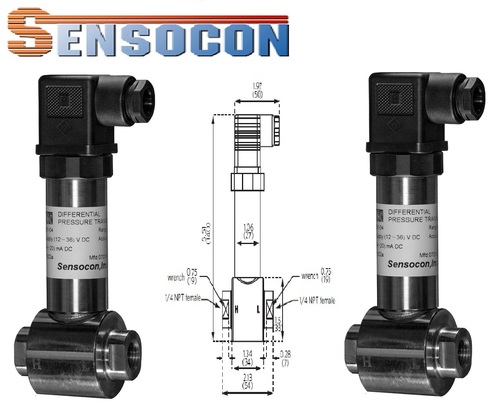
Sensocon USA Wet/Wet Differential Pressure Transmitter Series 251-05
Thread : 1/4 NPT Female
Accessories : Mounting Hardware Included
Processing Type : Other, Electronic
Sensor Type : Wet/Wet Differential Pressure Transmitter
Display : None (Analog Output)
Material : Other, Aluminum Housing

 Send Inquiry


Our Products
- Best Supplier GEMTECH Differential Pressure Gauge | D.P.ENGINEERS DELHI
- Top ahu filter suppliers manufacturers in india
- Moisture Separator Filter Manufacturers & Supplier
- Triveni Turbine Elements Filter- D.P.ENGINEERS
- Wire Mesh Filter
- HVAC Filters
- Pocket Filter
- AHU Filters-Manufacturers,Suppliers & Exporters in
- Volume Control Damper
- HEPA Filters
- Pharmaceutical Sparkler Filter
- Gas Turbine Air Intake Filters
- Ductable Unit Pre Filter Manufacturers|India Delhi
- AHU Fine Filter| Industrial AHU Fine Filter MANUFA
- DC motor filters - Panel Air Filters for DC Motors
- Hydraulic Oil Filters - Manufacturers & Suppliers in India | D.P.Engineers
- AHU Filter Manufacturers - Industrial Air Filters
- Fine Filter|AHU Filter Manufacturers|Industrial Ai
- Clean Room Equipments
- GEMTECH Wholesale Pressure Gauge in india | Delh
- Winters Pressure Transmitter Wholesalers|India-Del
- 43000 Capsu Photohelic Pressure Dwyer
- Series 1620 Single and Dual Pressure Switch Wholes
- 1900 Compact Low Differential Pressure Switch -D.P
- Series MS| Magnesense Differential Pressure Tran
- DPG Digital Pressure Gauges Winters Instruments
- Sensocon-Series 212 Weatherproof Pressure Transmit
- Dwyer Magnehelic Gauges Series 2000 - D.P.ENGINEER
- Differential Pressure Gauge Series Sz-5000 sensoco
- Setra USA -Models 265 Differential Pressure Transd
- Dwyer 616KD differential pressure transmitter whol
- DPG 200 Digital Pressure Gage Dwyer
- Huba Switzerland Pressure Transmitter
- series 2-5000 | minihelic ii differential pressu
- Differential Pressure Transmitter-Sensocon USA
- Sensocon - Dwyer S2000 Pressure Gauge
- Series 211sensocon differential pressure transmitt
- Series 3000MR/3000MRS | Photohelic Switch
- Huba Differential Pressure Switch
- DWYER Pressure Switch
- Wet Differential Pressure Transmitter-Series251-DP
- DM-1000 Digital Differential Pressure
- Series DX |Wet/Wet Differential Pressure Switch-
- Differential Pressure Gauge Series S-5000 Sensocon
- Dwyer Mark II | Moded Plastic Manometer
- Series A3000 Photohelic Pressure Switch/Gage
- Series RHP Temperature/Humidity Transmitter DWYER
- SUPER SELLER DWYER MAGNEHELIC DIFFERENTIAL PRESSURE GAUGE ALL INDIA
- Series S2000 SENSOCON Differential pressure|Dealers |Distbutors|wholesale in,Ambala,Chandigarh,Baddi,Nalagarh,Solan,Jharmajri Road,Barotiwala,Paonta Sahib,Himanchal Pradesh| D.P.ENGINEERS
- Dwyer Instruments Appoints DP ENGINEERS as Distrib
- Series 211 - Differential Pressure Transmitter - D
- Galaxy Differential pressure|Dealers|Distbutors|wh
- Magnehelic Gauge In Mumbai (Bombay) - Dealers & Tr
- Galaxy Differential Pressure Gauges Dealers Wholes
- Dwyer 1950Explosion Proof Differential Pressure Switch| Delhi| NCR|India-D.P.ENGINEERS
- Evaporative Cooling Pad Manufacturers in India
- Series S2000 GEMTECH Differential Pressure Gauges|Dealers Wholesaler from Delhi|NCR|India|Faridabad|Noida|Ghaziabad|Gurgaon|Bulandshahr|Ballabhgarh|Bahadurgarh|Dehradun|Haridwar|Udham Singh Nagar
- Evaporative Cooling Pads
- Cooling Tower Spare Parts
- Evaporative Cooling Pad
- Pvc Drift Eliminator
- Cooling Tower Sprinkler Manufacturer from DELHI,NC
- Industrial Impeller Manufacture IN,DELHI,NCR,India
- Centrifugal Blower
- Sisw Centrifugal Blower-Centrifugal Blower
- Series- AT-S Nicotra Forward Curved Centrifugal Fa
- Aluminium Impeller
- DIDW Forward Curved Fan
- Series RDH Nicotra Backard Curved Centrifugal Fan-
- ADH Nicotra Forward Curved Centrifugal Fan
- Fan Impeller - blower impeller,Impeller Fan Manufa
- GI Blower Hollow Shaft Type Manufacturers in Delhi
- Centrifugal Blower - Centrifugal Blowers Manufactu
- Caryaire Inline Fan -Circular Inline Fan - Wholesa
- ACID PROOF AXIL FLOW FAN -MANUFACTURER DELHI INDIA
- Duct Damper
- Air Conditioning Diffuser
- Air Conditioning Duct
- Air Washer Units
- AC Aluminium Grill
- Air Handling Units
- Fan Coil Unit
- Dust Collector Filter Bag
- Leading Supplier Of AHU (Air Handling Unit) Filter from Delhi-NCR-India-Mumbai-Kolkata-Gurajat-Noida-Bangalore-Faridabad-Gurgaon
- Cooling And Condenser Coils
- Galaxy Magnehelic Gauge Wholesale Suppliers India
- Series S2000 GEMTECH Differential Pressure Gauges|Dealers |Distbutors|wholesale in,Ambala,Chandigar
- SENSOCON Differential Pressure Gauges Dealers Wholesaler for Delhi|NCR|India|Faridabad|Noida|Ghaziabad|Gurgaon|Bulandshahr|Ballabhgarh|Bahadurgarh|Dehradun|Haridwar|Udham Singh Nagar
- Series G2000 Galaxy Differential Pressure Gauges Dealers Wholesaler from Delhi|NCR|India|Faridabad|Noida|Ghaziabad|Gurgaon|Bulandshahr|Ballabhgarh|Bahadurgarh|Dehradun|Haridwar|Udham Singh Nagar
- TOP Dwyer Magnehelic Gauge Wholesale Suppliers India
- Galaxy Differential Pressure Gauge Wholesale Gandh
- Magnehelic Gauge Nozzle Manufacturer In India
- Series TFP-GI Gas Turbine Flow Meter - Dwyer Instr
- GEMTECH Differential Pressure Gauge Wholesalers |Dealers Wholesaler from Delhi|NCR|India|Faridabad|Noida|Ghaziabad|Gurgaon|Bulandshahr|Ballabhgarh|Bahadurgarh|Dehradun|Haridwar|Udham Singh Nagar
- Axial Flow Fan
- Series 2000 DwyerMagnehelic Pressure Gauges Dealers Wholesaler from Delhi|NCR|India|Faridabad|Noida|Ghaziabad|Gurgaon|Bulandshahr|Ballabhgarh|Bahadurgarh|Dehradun|Haridwar|Udham Singh Nagar
- Leading Supplier Of Evaporative cellulose cooling
- Evaporative Cooling Pad Wholesales Supplier|D.P.E
- Dwyer Instruments Appoints D.P.Engineers as Distributor india |Delhi NCR|Bangalore|Mumbai|Gurajat|Kolkata
- GEMTECH Differential Pressure Gauges Dealers Wholesaler for Delhi|NCR|India|Faridabad|Noida|Ghaziabad|Gurgaon|Bulandshahr|Ballabhgarh|Bahadurgarh|Dehradun|Haridwar|Udham Singh Nagar- DP ENGINEERS
- GEMTECH INSTRUMENTS SEARCH RESULTS - D.P.ENGINEERS
- GEMTECH Differential Pressure INSTRUMENTS Introduction - D.P.ENGINEERS DELHI NCR INDIA
- GEMTECH Differential Pressure Gauge Authorized Wholesale Dealer from D.P.ENGINEERS DELHI NCR INDIA
- Introduction Of GEMTECH INSTRUMENTS
- Product Categories | GEMTECH INSTRUMENTS
- Distributor locator - GEMTECH - Instruments
- GEMTECH Instruments PRODUCTS Shop - GEMTECH Instrument
- GEMTECH | DIFFERENTIAL PRESSURE GAUGE Authorized Wholesaler Dealer From Delhi India
- GEMTECH Instruments Distributor Wholesaler Dealer
- Home Products | GEMTECH Instruments
- GEMTECH - INSTRUCTIONS Partner - D.P.ENGINEERS IND
- GEMTECH - Instruments Distributors for India Delhi
- GEMTECH Series G2000- Differential Pressure Gauge
- Series G2-5000 Mini Differential Pressure Gauges |GEMTECH -D.P.Engineers in NCR Delhi Chennai Gujarat Mumbai,Bangalore
- GEMTECH - INSTRUMENT Mini Differential Pressure Gauge MM Water Column ( W.C. )
- GEMTECH Differential Pressure Switch Wholesaler India Delhi NCR | D.P.ENGINEERS
- Series G2-5000 GEMTECH MINI Differential Pressure Gauges Wholsaler Delhi,NCR,INDIA
- GEMTECH Differential Pressure Switch Dealers Wholesaler|Delhi|NCR|India|Bangalore|Mumbai|Kolkata
- GEMTECH SERIES 3000 DIGITAL PRESSURE GAUGE WHOLESALER Delhi,NCR INDIA
- GEMTECH 3000 DIGITAL PRESSURE GAUGE MBAR - wholesale Distribution Mumbai Gujarat Bangalore
- GEMTECH SERIES 3000 DIGITAL PRESSURE GAUGE PASCAL wholesalers Dealers Delhi NCR INDIA
- GEMTECH 3000 DIGITAL PRESSURE GAUGE Inch of Water Dealers Wholesaler from Delhi|NCR|India|Faridabad|Noida|Ghaziabad|Gurgaon|Bulandshahr|Ballabhgarh|Bahadurgarh|Dehradun|Haridwar|Udham Singh Nagar
- GEMTECH Instruments Appoints 3000 DIGITAL PRESSURE GAUGE MM WC Dealers Wholesaler from Delhi|NCR|India-Bahadurgarh|Dehradun|Haridwar|Udham Singh Nagar-D.P.ENGINEERS
- GEMTECH SERIES 3000 DIGITAL PRESSURE GAUGE KPA Dealers Wholesaler|Delhi|NCR|India|Bangalore|Mumbai|Kolkata-D.P.ENGINEERS
- SERIES 3000 GEMTECH DIGITAL PRESSURE GAUGE & alarm Pascal|Dealers|Wholesaler|Delhi|NCR|India|Bangalore|Mumbai|Kolkata|D.P.ENGINEERS
- Series 212 - Weather-Proof Differential Pressure Transmitter Wholesaler from Delhi|NCR|India|Faridabad|Noida|Ghaziabad|Gurgaon|Bulandshahr|Ballabhgarh|Bahadurgarh|Dehradun|Haridwar|Udham Singh Nagar
- GEMTECH Series G2000 Differential Pressure Gauges wholesalers in Hospitality pharmaceutical industries india
- Air Washer Cooling Pad Manufacturer Wholesale Suppliers in India
- Dwyer Series MSX Magnesense Differential Pressure Transmitter wholesalers in DELHI NCR INDIA
- Dwyer Series MSX Magnesense Differential Pressure Transmitter wholesale IN DELHI NCR INDIA
- Magnehelic Differential Pressure Gauge Dual Scale wholesale in DELHI,NCR ,INDIA
- GEMTECH Differential Pressure Switch Wholesaler In
- Sensocon Series 211 - Differential Pressure Transm
- Sensocon Series 211 Differential Pressure Transmit
- Huba Control Online - Pressure Transmitter 528 - D.P.ENGINEERS IN DELHI
- Top Wholesalers GEMTECH Differential Pressure Gauges Online | D.P.ENGINEERS
- DWYER OMEGA Instruments Distributors Wholesaler In India
- Star Supplier of Gemtech Differential Pressure Gau
- Industry Leaders of GEMTECH Differential pressure
- Industry Leaders Supplier GEMTECH_Differential Pressure Gauge India Delhi NCR
- Popular GEMTECH Differential Pressure Gauge Dealers in Delhi NCR INDIA
- GEMTECH DIFFERENTIAL PRESSURE GAUGE JHARKHAND INDUSTRIAL AREA INDIA
- "COOLING TOWER FILLS" MANUFACTURER COOLING TOWER S
- GEMTECH INSTRUMENT Mini Differential Pressure Gaug
- DC Blower Air Filter Key Manufacturers and Suppliers in DELHI NCR INDIA
- GEMTECH OMEGA Series G2000 Differential Pressure Gauges FOR SALE DELHI NCR INDIA
- Popular Brands Across Delhi, NCR,India - GEMTECH Differential Pressure Gauge wholesale in D.P.ENGINEERS
- huba 402 series - differential pressure transmitter wholesale in delhi
- Huba Switzerland Differential Pressure Switch Distributor in India
- Huba Control Differential Pressure Transmitter 692.915007141 Online Shop India
- jiss galaxy differential pressure gauge wholesale delhi ncr india | D.P.ENGINEERS
- BEST Manufacturers in Round DC Motor Air Filter in Delhi
- Huba Control Differential Pressure Transmitter On
- Home / Shop / Indicators & Controllers / Differential Pressure / Differential Pressure Transmitters / Huba Control 520 Pressure Transmitter
- Measurement Gauges & Gauge Fittings>Pressure Gauge >GEMTECH Differential Pressure Gauges
- Measurement Gauges & Gauge Fittings > Pressure Gauge > Magnehelic Differential Pressure Gauges
- Series 616KX Differential Pressure Transmitter wholesalers | D.P.ENGINEERS 9268631221
- SS Box for Magnehelic Gauge Manufacturer,Supplier: D.P.ENGINEERS IN DELHI
- Huba Control Online Shop Delhi,NCR,INDIA ... pressure transmitter model 520.930s022401
- STAR SUPPLIER (DPN) DIFFERENTIAL PRESSURE NOZZLE ALL INDIA
- Setra Model 3100 and 3200 Pressure Transducers Wholesaler Delhi, New Delhi, Delhi NCR, Noida, Ghaziabad


X/852, Chand Mohalla, Gandhi Nagar,Delhi - 110031, India

Mr Devinder Pal Sharma
(Proprietor)
Mobile :08045477602
 Send Inquiry
 Send SMS
Developed and Managed by Infocom Network Private Limited.
 English
 Spanish
 French
 German
 Italian
 Chinese (Simplified)
 Japanese
 Korean
 Arabic
 Portuguese