
Call us now :08045477602
 Send Inquiry
 Send Inquiry
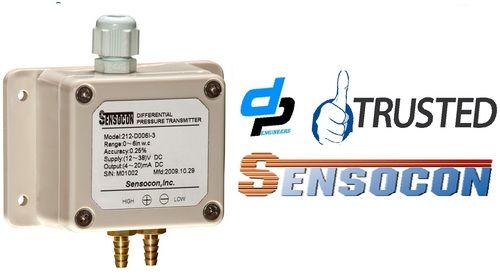
Sensocon USA 212-D002K-3 Differential Pressure Transmitter
Sensocon USA 212-D002K-3 Differential Pressure Transmitter Specification
- Grade
- Industrial Grade
- Outer Size
- 105 x 93 x 60 mm (approx)
- Thread
- 1/8 Female NPT
- Seal Material
- Silicone
- Display
- Digital LCD Display
- Sensor Type
- Differential Pressure Transducer
- Material
- ABS Plastic Housing
- Processing Type
- Electronic
- Mount Type
- Wall Mount
- Scale Range
- 0-2 kPa
- Accuracy
- 1% of full scale
- Finishing
- Powder Coated
- Measure Pressure Of
- Air and Non-Corrosive Gases
- Accessories
- Mounting Screws, Instruction Manual
Sensocon USA 212-D002K-3 Differential Pressure Transmitter Trade Information
- Payment Terms
- Cash on Delivery (COD), Cash Against Delivery (CAD), Cash in Advance (CID), Cash Advance (CA)
- Main Export Market(s)
- Asia
- Main Domestic Market
- Himachal Pradesh, Pondicherry, Nagaland, South India, Central India, East India, West India, Andaman and Nicobar Islands, Andhra Pradesh, Assam, Arunachal Pradesh, Bihar, Chandigarh, Delhi, Goa, Jammu and Kashmir, Jharkhand, Karnataka, Madhya Pradesh, Maharashtra, Mizoram, Meghalaya, Manipur, Punjab, Rajasthan, Sikkim, Tamil Nadu, Telangana, Tripura, West Bengal, Uttarakhand, Daman and Diu, Dadra and Nagar Haveli, Lakshadweep, Uttar Pradesh, Haryana, Gujarat, North India, Kerala, Odisha, Chhattisgarh, All India
About Sensocon USA 212-D002K-3 Differential Pressure Transmitter
Sensocon USA 212-D002K-3 Differential Pressure Transmitter
The Series 212 Weatherproof Differential Pressure Transmitter can accurately measure positive, negative, or differential pressure and send a corresponding 4-20 mA or 0-10 V output signal. The Series 212 Weatherproof Differential Pressure Transmitter is designed with an IP 65 enclosure and can be easily mounted to any flat surface. The Series 212 is not position sensitive and can be mounted in any orientation without compromising accuracy. The compact, lightweight design makes installation simple and easy.
SPECIFICATIONS
The Series 212 Weatherproof Differential Pressure Transmitter can accurately measure positive, negative, or differential pressure and send a corresponding 4-20 mA or 0-10 V output signal. The Series 212 Weatherproof Differential Pressure Transmitter is designed with an IP 65 enclosure and can be easily mounted to any flat surface. The Series 212 is not position sensitive and can be mounted in any orientation without compromising accuracy. The compact, lightweight design makes installation simple and easy.
SPECIFICATIONS
- Maximum Pressure: Ranges 5 PSI (35 kPa) = 15 PSI (100kPa) MaxRanges > 5 PSI (35 kPa) = 30 PSI (200kPa) Max
- Media compatibility: Air and compatible non-combustible, non-corrosive gases
- Accuracy: Ranges 4" w.c. (1kPa) 1.0%Ranges 5" w.c. (1.25kPa) 0.25%
- Temperature Ranges: Compensated: 15 to 120F (-10 to 50C)Operating: -10 to 155F (-25 to 70C)
- Thermal Effect: +/- 0.028% FS/F (+/- 0.50% FS/C)
- Stability: +/- 0.25% FS/year
- Output Signal: 4-20 mA, 2-wire or 0 - 10 V
- Loop Resistance: 250 @ 24 VDC
- Power Supply: 12-30 VDC
- Enclosure Rating: IP 65
- Electrical Connections: screw terminals
- Electrical Entry: PG7 Cable Gland
- Process Connection: Barbed fittings for 3/16 flexible tubing
- Agency Approvals:CE
Dependable Performance in Industrial Environments
Engineered for industrial use, the Sensocon USA 212-D002K-3 excels in monitoring differential pressure in HVAC, cleanrooms, and process systems. Its durable ABS housing, IP54 rating, and wide operating temperature range enable reliable operation in varied settings. Overpressure protection up to 10 kPa further enhances its resilience.
User-Friendly Installation and Operation
The transmitter includes mounting screws, an instruction manual, and features intuitive front-panel buttons for zero and span adjustments. A digital LCD display provides clear, real-time readings, ensuring seamless integration and quick setup in industrial environments with minimal training required.
Versatile Application for Air and Compatible Gases
Designed to measure the differential pressure of air and non-corrosive gases, this device is a choice solution for filter monitoring, airflow measurement, and maintaining critical environmental control. Its 1/8 female NPT threads allow for secure and flexible installation in a variety of systems.
FAQs of Sensocon USA 212-D002K-3 Differential Pressure Transmitter:
Q: How do I install the Sensocon USA 212-D002K-3 Differential Pressure Transmitter?
A: Installation is straightforwardsecure the transmitter to a wall using the supplied mounting screws, connect wiring to the screw terminal block, and use the 1/8 female NPT threads for pressure connections. The package includes an instruction manual with step-by-step guidance.Q: What process does the device use to measure differential pressure?
A: The transmitter utilizes an electronic differential pressure transducer that senses pressure differences between two points. The measured value is then converted into a precise 4-20 mA output, which can be transmitted to monitoring or control systems.Q: When should I adjust the zero or span on the transmitter?
A: Zero and span adjustments via the front panel buttons are typically required during initial installation or after significant system changes to ensure measurement accuracy. Routine calibration is also recommended for consistent performance.Q: Where can this transmitter be deployed effectively?
A: It is ideal for use in HVAC systems, cleanrooms, filter condition monitoring, and various industrial environments where air or compatible gases are being monitored. The transmitter operates well in ambient temperatures from 0C to 50C.Q: What are the benefits of using this transmitter for air and gas measurement?
A: Key benefits include high accuracy (1% of full scale), long-term reliability, quick digital display readings, and ease of adjustments. Its IP54-rated ABS housing provides protection against dust and splashes, making it suitable for demanding industrial sites.Q: How do I ensure safe and optimal operation of the device?
A: To maintain its performance, operate the transmitter within its specified temperature and pressure ranges, use it only with air or non-corrosive gases, and regularly inspect connections and calibration. Avoid exposing the device to pressures above its 10 kPa overpressure limit.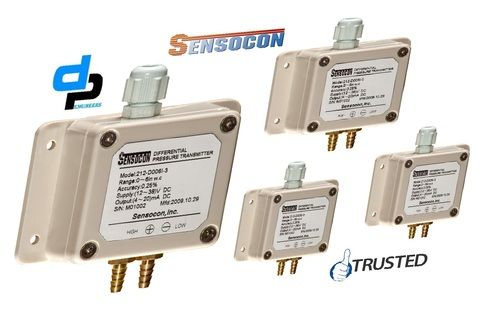
Tell us about your requirement

Price:
Quantity
Select Unit
- 50
- 100
- 200
- 250
- 500
- 1000+
Additional detail
Mobile number
Email

More Products in Sensocon-Series 212 Weatherproof Pressure Transmit Category
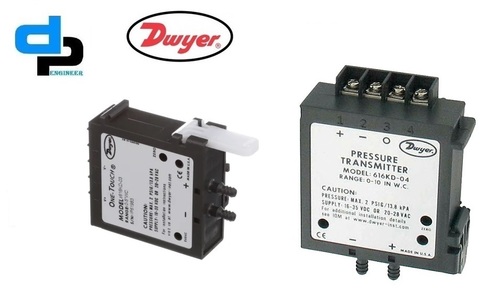
Dwyer 616KD-02 Differential Pressure Transmitter
Material : Metal Alloy
Finishing : Matte, Polished, Galvanized, Antique
Accuracy : 0.25% %
Mount Type : Panel
Processing Type : Standard
Measure Pressure Of : Steam, Oil, Gas, Water
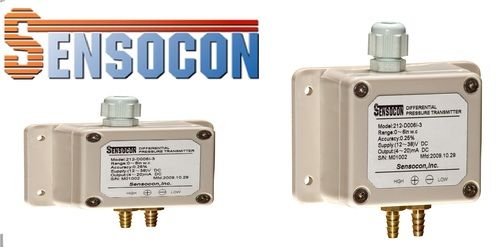
Sensocon USA 212-D010I-3 Differential Pressure Transmitter
Material : Other, ABS Plastic Housing
Finishing : Other, Powder Coated
Accuracy : 1% of full scale
Mount Type : Other, Wall Mount
Processing Type : Other, Analog Signal Processing
Measure Pressure Of : Other, Air and Noncorrosive Gases
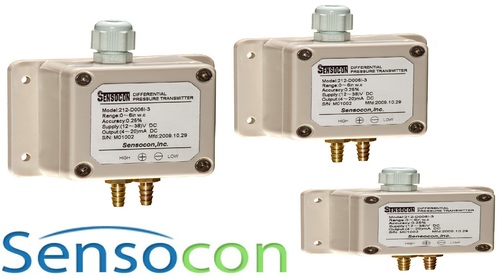
Sensocon USA 212-D010K-3 Differential Pressure Transmitter
Material : Other, ABS Plastic Housing
Finishing : Other, Powder Coated
Accuracy : 1% of Full Scale
Mount Type : Other, Wall Mount
Processing Type : Other, Electronic
Measure Pressure Of : Other, Air and NonCorrosive Gases
Sensocon USA 212-D005K-3 Differential Pressure Transmitter
Material : Other, ABS Plastic Housing
Finishing : Other, Powder Coated
Accuracy : 1% of Full Scale
Mount Type : Other, Panel or Wall Mount
Processing Type : Other, Electronic
Measure Pressure Of : Other, Air and NonCorrosive Gases

 Send Inquiry


Our Products
- Axial Flow Fan
- Wire Mesh Filter
- HVAC Filters
- Pocket Filter
- Pre Filter
- AHU Filters-Manufacturers,Suppliers & Exporters in
- Volume Control Damper
- HEPA Filters
- Pharmaceutical Sparkler Filter
- Gas Turbine Air Intake Filters
- Evaporative Cooling Pads
- Cooling Tower Spare Parts
- Evaporative Cooling Pad
- Pvc Drift Eliminator
- Cellulose Pad
- Centrifugal Blower
- Sisw Centrifugal Blower-Centrifugal Blower
- Series- AT-S Nicotra Forward Curved Centrifugal Fa
- Aluminium Impeller
- DIDW Forward Curved Fan
- Series RDH Nicotra Backard Curved Centrifugal Fan-
- ADH Nicotra Forward Curved Centrifugal Fan
- Duct Damper
- Air Conditioning Diffuser
- Air Conditioning Duct
- Air Washer Units
- AC Aluminium Grill
- Air Handling Units
- Fan Coil Unit
- Dust Collector Filter Bag
- Cooling And Condenser Coils
- TOP Dwyer Magnehelic Gauge Wholesale Suppliers India
- 43000 Capsu Photohelic Pressure Dwyer
- Series 1620 Single and Dual Pressure Switch Wholes
- 1900 Compact Low Differential Pressure Switch -D.P
- Series MS| Magnesense Differential Pressure Tran
- DPG Digital Pressure Gauges Winters Instruments
- Sensocon-Series 212 Weatherproof Pressure Transmit
- Dwyer Magnehelic Gauges Series 2000 - D.P.ENGINEER
- Galaxy Magnehelic Gauge
- Differential Pressure Gauge Series Sz-5000 sensoco
- Setra USA -Models 265 Differential Pressure Transd
- DPG 200 Digital Pressure Gage Dwyer
- Huba Switzerland Pressure Transmitter
- series 2-5000 | minihelic ii differential pressu
- Differential Pressure Transmitter-Sensocon USA
- DWYER Magnehelic Gauge
- Sensocon - Dwyer S2000 Pressure Gauge
- Series 211sensocon differential pressure transmitt
- Series 3000MR/3000MRS | Photohelic Switch
- Huba Differential Pressure Switch
- DWYER Pressure Switch
- Wet Differential Pressure Transmitter-Series251-DP
- DM-1000 Digital Differential Pressure
- Series DX |Wet/Wet Differential Pressure Switch-
- Differential Pressure Gauge Series S-5000 Sensocon
- Dwyer Mark II | Moded Plastic Manometer
- Best Supplier GEMTECH Differential Pressure Gauge | D.P.ENGINEERS DELHI
- SENSOCON Differential Pressure Gauges Dealers Wholesaler for Delhi|NCR|India|Faridabad|Noida|Ghaziabad|Gurgaon|Bulandshahr|Ballabhgarh|Bahadurgarh|Dehradun|Haridwar|Udham Singh Nagar
- Clean Room Equipments
- Series A3000 Photohelic Pressure Switch/Gage
- Dwyer 616KD differential pressure transmitter whol
- Series RHP Temperature/Humidity Transmitter DWYER
- DC motor filters - Panel Air Filters for DC Motors
- Hydraulic Oil Filters - Manufacturers & Suppliers in India | D.P.Engineers
- Magnehelic Gauge Nozzle Manufacturer In India
- Fan Impeller - blower impeller,Impeller Fan Manufa
- Industrial Impeller Manufacture IN,DELHI,NCR,India
- Centrifugal Blower - Centrifugal Blowers Manufactu
- Caryaire Inline Fan -Circular Inline Fan - Wholesa
- Triveni Turbine Elements Filter- D.P.ENGINEERS
- Moisture Separator Filter Manufacturers & Supplier
- GEMTECH Differential Pressure Gauge Wholesalers |Dealers Wholesaler from Delhi|NCR|India|Faridabad|Noida|Ghaziabad|Gurgaon|Bulandshahr|Ballabhgarh|Bahadurgarh|Dehradun|Haridwar|Udham Singh Nagar
- ACID PROOF AXIL FLOW FAN -MANUFACTURER DELHI INDIA
- Cooling Tower Sprinkler Manufacturer from DELHI,NC
- Dwyer 1950Explosion Proof Differential Pressure Switch| Delhi| NCR|India-D.P.ENGINEERS
- Series TFP-GI Gas Turbine Flow Meter - Dwyer Instr
- Galaxy Differential Pressure Gauges Dealers Wholes
- Magnehelic Gauge In Mumbai (Bombay) - Dealers & Tr
- GEMTECH Wholesale Pressure Gauge in india | Delh
- AHU Filter Manufacturers - Industrial Air Filters
- Fine Filter|AHU Filter Manufacturers|Industrial Ai
- Galaxy Differential pressure|Dealers|Distbutors|wh
- Winters Pressure Transmitter Wholesalers|India-Del
- Series 211 - Differential Pressure Transmitter - D
- Dwyer Instruments Appoints DP ENGINEERS as Distrib
- GI Blower Hollow Shaft Type Manufacturers in Delhi
- Ductable Unit Pre Filter Manufacturers|India Delhi
- AHU Fine Filter| Industrial AHU Fine Filter MANUFA
- Leading Supplier Of AHU (Air Handling Unit) Filter from Delhi-NCR-India-Mumbai-Kolkata-Gurajat-Noida-Bangalore-Faridabad-Gurgaon
- Galaxy Differential Pressure Gauge Wholesale Gandh
- Series S2000 SENSOCON Differential pressure|Dealers |Distbutors|wholesale in,Ambala,Chandigarh,Baddi,Nalagarh,Solan,Jharmajri Road,Barotiwala,Paonta Sahib,Himanchal Pradesh| D.P.ENGINEERS
- Series G2000 Galaxy Differential Pressure Gauges Dealers Wholesaler from Delhi|NCR|India|Faridabad|Noida|Ghaziabad|Gurgaon|Bulandshahr|Ballabhgarh|Bahadurgarh|Dehradun|Haridwar|Udham Singh Nagar
- Series S2000 GEMTECH Differential Pressure Gauges|Dealers Wholesaler from Delhi|NCR|India|Faridabad|Noida|Ghaziabad|Gurgaon|Bulandshahr|Ballabhgarh|Bahadurgarh|Dehradun|Haridwar|Udham Singh Nagar
- Series S2000 GEMTECH Differential Pressure Gauges|Dealers |Distbutors|wholesale in,Ambala,Chandigar
- Series 2000 DwyerMagnehelic Pressure Gauges Dealers Wholesaler from Delhi|NCR|India|Faridabad|Noida|Ghaziabad|Gurgaon|Bulandshahr|Ballabhgarh|Bahadurgarh|Dehradun|Haridwar|Udham Singh Nagar
- Leading Supplier Of Evaporative cellulose cooling
- Evaporative Cooling Pad Wholesales Supplier|D.P.E
- Dwyer Instruments Appoints D.P.Engineers as Distributor india |Delhi NCR|Bangalore|Mumbai|Gurajat|Kolkata
- GEMTECH Differential Pressure Gauges Dealers Wholesaler for Delhi|NCR|India|Faridabad|Noida|Ghaziabad|Gurgaon|Bulandshahr|Ballabhgarh|Bahadurgarh|Dehradun|Haridwar|Udham Singh Nagar- DP ENGINEERS
- GEMTECH INSTRUMENTS SEARCH RESULTS - D.P.ENGINEERS
- GEMTECH Differential Pressure INSTRUMENTS Introduction - D.P.ENGINEERS DELHI NCR INDIA
- GEMTECH Differential Pressure Gauge Authorized Wholesale Dealer from D.P.ENGINEERS DELHI NCR INDIA
- Introduction Of GEMTECH INSTRUMENTS
- Product Categories | GEMTECH INSTRUMENTS
- Distributor locator - GEMTECH - Instruments
- GEMTECH Instruments PRODUCTS Shop - GEMTECH Instrument
- GEMTECH | DIFFERENTIAL PRESSURE GAUGE Authorized Wholesaler Dealer From Delhi India
- GEMTECH Instruments Distributor Wholesaler Dealer
- Home Products | GEMTECH Instruments
- GEMTECH - INSTRUCTIONS Partner - D.P.ENGINEERS IND
- GEMTECH - Instruments Distributors for India Delhi
- GEMTECH Series G2000- Differential Pressure Gauge
- Series G2-5000 Mini Differential Pressure Gauges |GEMTECH -D.P.Engineers in NCR Delhi Chennai Gujarat Mumbai,Bangalore
- GEMTECH - INSTRUMENT Mini Differential Pressure Gauge MM Water Column ( W.C. )
- GEMTECH Differential Pressure Switch Wholesaler India Delhi NCR | D.P.ENGINEERS
- Series G2-5000 GEMTECH MINI Differential Pressure Gauges Wholsaler Delhi,NCR,INDIA
- GEMTECH Differential Pressure Switch Dealers Wholesaler|Delhi|NCR|India|Bangalore|Mumbai|Kolkata
- GEMTECH SERIES 3000 DIGITAL PRESSURE GAUGE WHOLESALER Delhi,NCR INDIA
- GEMTECH 3000 DIGITAL PRESSURE GAUGE MBAR - wholesale Distribution Mumbai Gujarat Bangalore
- GEMTECH SERIES 3000 DIGITAL PRESSURE GAUGE PASCAL wholesalers Dealers Delhi NCR INDIA
- GEMTECH 3000 DIGITAL PRESSURE GAUGE Inch of Water Dealers Wholesaler from Delhi|NCR|India|Faridabad|Noida|Ghaziabad|Gurgaon|Bulandshahr|Ballabhgarh|Bahadurgarh|Dehradun|Haridwar|Udham Singh Nagar
- GEMTECH Instruments Appoints 3000 DIGITAL PRESSURE GAUGE MM WC Dealers Wholesaler from Delhi|NCR|India-Bahadurgarh|Dehradun|Haridwar|Udham Singh Nagar-D.P.ENGINEERS
- GEMTECH SERIES 3000 DIGITAL PRESSURE GAUGE KPA Dealers Wholesaler|Delhi|NCR|India|Bangalore|Mumbai|Kolkata-D.P.ENGINEERS
- SERIES 3000 GEMTECH DIGITAL PRESSURE GAUGE & alarm Pascal|Dealers|Wholesaler|Delhi|NCR|India|Bangalore|Mumbai|Kolkata|D.P.ENGINEERS
- Series 212 - Weather-Proof Differential Pressure Transmitter Wholesaler from Delhi|NCR|India|Faridabad|Noida|Ghaziabad|Gurgaon|Bulandshahr|Ballabhgarh|Bahadurgarh|Dehradun|Haridwar|Udham Singh Nagar
- GEMTECH Series G2000 Differential Pressure Gauges wholesalers in Hospitality pharmaceutical industries india
- Air Washer Cooling Pad Manufacturer Wholesale Suppliers in India
- Dwyer Series MSX Magnesense Differential Pressure Transmitter wholesalers in DELHI NCR INDIA
- Dwyer Series MSX Magnesense Differential Pressure Transmitter wholesale IN DELHI NCR INDIA
- Magnehelic Differential Pressure Gauge Dual Scale wholesale in DELHI,NCR ,INDIA
- GEMTECH Differential Pressure Switch Wholesaler In
- Sensocon Series 211 - Differential Pressure Transm
- Sensocon Series 211 Differential Pressure Transmit
- Huba Control Online - Pressure Transmitter 528 - D.P.ENGINEERS IN DELHI
- Top Wholesalers GEMTECH Differential Pressure Gauges Online | D.P.ENGINEERS
- DWYER OMEGA Instruments Distributors Wholesaler In India
- Star Supplier of Gemtech Differential Pressure Gau
- Industry Leaders of GEMTECH Differential pressure
- Industry Leaders Supplier GEMTECH_Differential Pressure Gauge India Delhi NCR
- Popular GEMTECH Differential Pressure Gauge Dealers in Delhi NCR INDIA
- GEMTECH DIFFERENTIAL PRESSURE GAUGE JHARKHAND INDUSTRIAL AREA INDIA
- "COOLING TOWER FILLS" MANUFACTURER COOLING TOWER S
- GEMTECH INSTRUMENT Mini Differential Pressure Gaug
- DC Blower Air Filter Key Manufacturers and Suppliers in DELHI NCR INDIA
- GEMTECH OMEGA Series G2000 Differential Pressure Gauges FOR SALE DELHI NCR INDIA
- Popular Brands Across Delhi, NCR,India - GEMTECH Differential Pressure Gauge wholesale in D.P.ENGINEERS
- huba 402 series - differential pressure transmitter wholesale in delhi
- Huba Switzerland Differential Pressure Switch Distributor in India
- Huba Control Differential Pressure Transmitter 692.915007141 Online Shop India
- jiss galaxy differential pressure gauge wholesale delhi ncr india | D.P.ENGINEERS
- BEST Manufacturers in Round DC Motor Air Filter in Delhi
- Huba Control Differential Pressure Transmitter On
- Home / Shop / Indicators & Controllers / Differential Pressure / Differential Pressure Transmitters / Huba Control 520 Pressure Transmitter


X/852, Chand Mohalla, Gandhi Nagar,Delhi - 110031, India

Mr Devinder Pal Sharma
(Proprietor)
Mobile :08045477602
 Send Inquiry
 Send SMS
 Call Me Free
Developed and Managed by Infocom Network Private Limited.
