
Call us now :08045477602
 Send Inquiry
 Send Inquiry
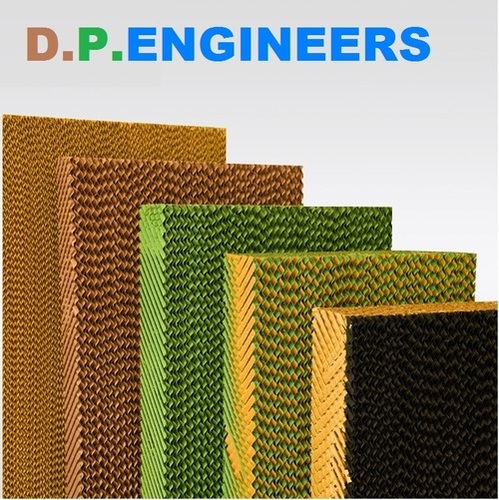
Evaporative Cooling Pads-Celdek Pad-Cellulose Pad
Price 350 INR/ Square Feet
MOQ : 200 Square Foots
Evaporative Cooling Pads-Celdek Pad-Cellulose Pad Specification
- Air Flow
- Depends on installation and fan specifications
- Refrigerating Capacity
- Dependent on air velocity and temperature difference
- Application
- Cooling applications in HVAC, greenhouses, poultry, industrial and commercial areas
- Material
- paper
- Condition
- New
- Type
- Evaporative Cooling Pad
- Dimension (L*W*H)
- Available in standard and customized sizes
- Cooling Type
- Evaporative
- Nozzle Material
- Plastic or Brass depending on water distribution system
- Water Flowing Rate
- Approximates 20-25 Ltr/Hr per square meter
- Water Pump Motor
- Depends on installation, typically 0.125-0.5 HP
- Noise Control
- Silent operation, no moving mechanical parts
- Pad Width
- Up to 600 mm
- Odor
- Odorless
- Water Distribution Method
- Gravity/Mist/Drip as per system design
- Color
- Green/Brown
- Evaporative Efficiency
- Above 85%
- Installation Method
- Suitable for metallic or plastic pad frames
- Edge Coating
- Green or Brown (optional for extra protection and durability)
- Fire Retardant Option
- Available on request
- Flute Angle
- 45x45 degrees
- PH Value
- 6-7
- Pad Height
- Up to 2000 mm
- Anti-Algae Property
- Yes
- Pad Thickness
- Available in 50 mm, 100 mm, 150 mm
- Honeycomb Structure
- Yes, for maximum surface area and cooling efficiency
- Service Life
- Up to 5 years, depending on water quality and maintenance
Evaporative Cooling Pads-Celdek Pad-Cellulose Pad Trade Information
- Minimum Order Quantity
- 200 Square Foots
- FOB Port
- Delhi
- Payment Terms
- Cash in Advance (CID), Cash Advance (CA), Cash on Delivery (COD), Cash Against Delivery (CAD)
- Supply Ability
- 1 Square Foot Per Day
- Delivery Time
- 1 Days
- Main Export Market(s)
- Middle East, Asia
- Main Domestic Market
- All India
About Evaporative Cooling Pads-Celdek Pad-Cellulose Pad
Evaporative Cooling Pads-Celdek Pad-Cellulose Pad
Product description:
Cooling pads are made of ripple fibre piles which are pressed in an angle of 45 and bound together in accordance with the cross direction of ripples.
Cooling pads boost superior hygroscopicity , wet stiffness, corrosion resistance and usable life because it adopts piles, with special hygroscopicity, advanced processing technology and the raw material added with special chemicals which will not be resolved by the action of water.
Applications :
Evaporative Air Cooling System
- House Hold Air Coolers
- Industrial And Commercial Cooling Applications
- Green Houses / Paultry Farms /Hatcheries
- Live Stocks /Dairy Farms /Breeding Areas
- Turbine Air-Intake
- Spray painting booth
Specification:
H: Height of Cooling Pad
- W : Width of cooling pads
- D : Thickness of Cooling pads
- h : Ripple Height of Cooling pads
- : Ripple Angle
- ; Ripple Angle
High-Efficiency Honeycomb Design
Our cooling pads utilize a honeycomb structure, which maximizes the surface area exposed to air and water, ensuring enhanced evaporation and cooling rates. The unique flute angle of 45x45 degrees further improves airflow passage while maintaining structural rigidity. As a result, these pads can achieve evaporative efficiencies above 85%, making them suitable for demanding cooling environments across industries.
Quality and Durability for Longevity
Manufactured from high-grade cellulose paper, these pads are available with green or brown edge coatings for improved protection against moisture and wear. They also offer anti-algae properties and an optional fire-retardant feature. Designed for a service life of up to 5 years with proper maintenance, these pads boost operational safety and reduce long-term replacement costs, providing reliable cooling for years.
Flexible Installation and Silent Operation
These evaporative pads can be easily mounted in both metallic and plastic pad frames, accommodating standard and custom sizes for any system layout. Quiet operation is ensured, as there are no moving mechanical parts within the pads themselves. Water can be supplied using gravity, mist, or drip methods depending on your system's design, and compatible pumps and nozzles are selected based on the pad size and installation requirements.
FAQ's of Evaporative Cooling Pads-Celdek Pad-Cellulose Pad:
Q: How do evaporative cooling pads improve cooling efficiency in HVAC and industrial environments?
A: Evaporative cooling pads, such as Celdek and Cellulose Pads, utilize a honeycomb cellulose structure to maximize water and air contact, allowing for efficient heat absorption and phase change. This raises the humidity of the air and delivers a substantial cooling effect, achieving evaporative efficiencies above 85% in suitable conditions.Q: What are the benefits of the honeycomb and flute angle design in these cooling pads?
A: The honeycomb structure provides a larger surface area for water evaporation, while the 45x45 degree flute angle ensures enhanced airflow through the pad. This combination results in consistent, high-rate evaporation and superior cooling performance even in challenging environments.Q: When should the cooling pads be replaced, and what factors affect their service life?
A: Cooling pads typically last up to 5 years. Their longevity depends on water quality, system maintenance, and the operating environment. Regular cleaning and using clean, treated water help extend pad life by preventing scale, clogging, or algae growth.Q: Where can these pads be installed and what applications are they suited for?
A: These evaporative cooling pads are suitable for metallic or plastic pad frames and can be used in HVAC systems, greenhouses, poultry farms, industrial buildings, and commercial spaces. Their flexibility in size and installation ensures compatibility with various cooling systems.Q: What is the recommended process for installing and maintaining these pads?
A: Installation involves fitting the pads into appropriate frames and connecting the water distribution system (gravity, mist, or drip). Maintenance includes periodic cleaning, checking for algae, and ensuring edges remain intact, especially if coated for durability. Following these steps ensures optimal performance and prolongs pad life.Q: How is water distributed over the pads, and what flow rate is required?
A: Water is delivered over the pads using gravity, mist, or drip systems as per the design. The typical flowing rate ranges from 20 to 25 liters per hour per square meter, ensuring consistent and thorough wetting for efficient evaporation.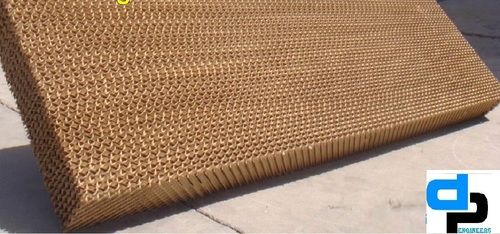
Tell us about your requirement

Price:
Quantity
Select Unit
- 50
- 100
- 200
- 250
- 500
- 1000+
Additional detail
Mobile number
Email

More Products in Evaporative Cooling Pad Category
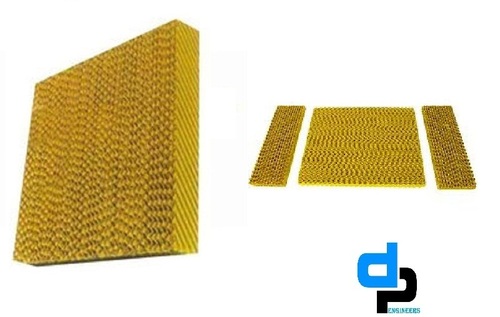
Yellow Cooling Pad
Price 300 INR / Square Foot
Minimum Order Quantity : 200 Square Foots
Application : Industrial, Commercial, Agriculture, Greenhouse, Poultry Farms
Type : Evaporative Cooling Pad
Condition : New
Cooling Type : Evaporative
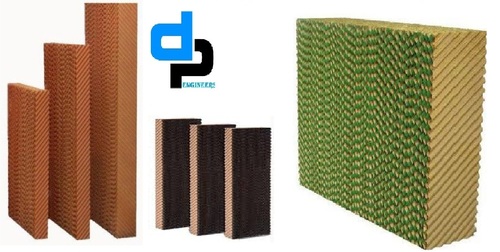
Honeycomb Cooling Pads
Price 280 INR
Minimum Order Quantity : 200 Square Foots
Application : Commercial & Industrial Air Cooling Systems
Type : Honeycomb Evaporative Cooling Pad
Condition : New
Cooling Type : Evaporative Air Cooling
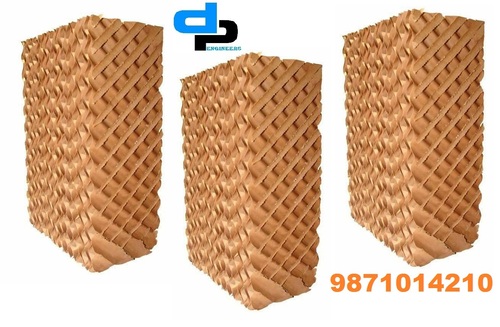
Cellulose Pad|Celdek Pad |Evaporative Cooling Pad
Price 350 INR / Square Feet
Minimum Order Quantity : 200 Square Foots
Application : Evaporative Air Cooling, Greenhouses, Industrial & Poultry Ventilation
Type : Evaporative Cooling Pad
Condition : New
Cooling Type : Evaporative
Chillcel High Efficiency Pads
Price 350 INR / Square Feet
Minimum Order Quantity : 200 Square Foots
Application : Evaporative cooling systems
Type : Cooling Pads
Condition : New
Cooling Type : Evaporative cooling

 Send Inquiry


Our Products
- Series DX |Wet/Wet Differential Pressure Switch-
- Top ahu filter suppliers manufacturers in india
- Moisture Separator Filter Manufacturers & Supplier
- Wire Mesh Filter
- Pocket Filter
- Hydraulic Oil Filters - Manufacturers & Suppliers in India | D.P.Engineers
- Triveni Turbine Elements Filter- D.P.ENGINEERS
- Volume Control Damper
- HVAC Filters
- Sisw Centrifugal Blower-Centrifugal Blower
- ADH Nicotra Forward Curved Centrifugal Fan
- Centrifugal Blower - Centrifugal Blowers Manufactu
- Industrial Impeller Manufacture IN,DELHI,NCR,India
- DIDW Forward Curved Fan
- Series RDH Nicotra Backard Curved Centrifugal Fan-
- Centrifugal Blower
- Aluminium Impeller
- Caryaire Inline Fan -Circular Inline Fan - Wholesa
- Air Washer Units
- AC Aluminium Grill
- Air Conditioning Duct
- Air Handling Units
- Air Conditioning Diffuser
- Duct Damper
- Fan Coil Unit
- Leading Supplier Of AHU (Air Handling Unit) Filter from Delhi-NCR-India-Mumbai-Kolkata-Gurajat-Noida-Bangalore-Faridabad-Gurgaon
- Dust Collector Filter Bag
- Cooling And Condenser Coils
- Galaxy Magnehelic Gauge Wholesale Suppliers India
- TOP Dwyer Magnehelic Gauge Wholesale Suppliers India
- Magnehelic Gauge Nozzle Manufacturer In India
- Series TFP-GI Gas Turbine Flow Meter - Dwyer Instr
- GEMTECH Wholesale Pressure Gauge in india | Delh
- Winters Pressure Transmitter Wholesalers|India-Del
- Sensocon-Series 212 Weatherproof Pressure Transmit
- Series RHP Temperature/Humidity Transmitter DWYER
- Galaxy Differential pressure|Dealers|Distbutors|wh
- Series 211 - Differential Pressure Transmitter - D
- Dwyer Instruments Appoints DP ENGINEERS as Distrib
- Galaxy Differential Pressure Gauge Wholesale Gandh
- Series G2000 Galaxy Differential Pressure Gauges Dealers Wholesaler from Delhi|NCR|India|Faridabad|Noida|Ghaziabad|Gurgaon|Bulandshahr|Ballabhgarh|Bahadurgarh|Dehradun|Haridwar|Udham Singh Nagar
- SENSOCON Differential Pressure Gauges Dealers Wholesaler for Delhi|NCR|India|Faridabad|Noida|Ghaziabad|Gurgaon|Bulandshahr|Ballabhgarh|Bahadurgarh|Dehradun|Haridwar|Udham Singh Nagar
- Series S2000 GEMTECH Differential Pressure Gauges|Dealers |Distbutors|wholesale in,Ambala,Chandigar
- Series S2000 GEMTECH Differential Pressure Gauges|Dealers Wholesaler from Delhi|NCR|India|Faridabad|Noida|Ghaziabad|Gurgaon|Bulandshahr|Ballabhgarh|Bahadurgarh|Dehradun|Haridwar|Udham Singh Nagar
- DPG 200 Digital Pressure Gage Dwyer
- DWYER Pressure Switch
- Magnehelic Gauge In Mumbai (Bombay) - Dealers & Tr
- series 2-5000 | minihelic ii differential pressu
- Differential Pressure Gauge Series S-5000 Sensocon
- Dwyer 1950Explosion Proof Differential Pressure Switch| Delhi| NCR|India-D.P.ENGINEERS
- Differential Pressure Gauge Series Sz-5000 sensoco
- Setra USA -Models 265 Differential Pressure Transd
- Series A3000 Photohelic Pressure Switch/Gage
- Series 3000MR/3000MRS | Photohelic Switch
- Axial Flow Fan
- Galaxy Differential Pressure Gauges Dealers Wholes
- Dwyer Magnehelic Gauges Series 2000 - D.P.ENGINEER
- Dwyer Mark II | Moded Plastic Manometer
- 1900 Compact Low Differential Pressure Switch -D.P
- Series 1620 Single and Dual Pressure Switch Wholes
- Dwyer 616KD differential pressure transmitter whol
- GEMTECH Differential Pressure Gauge Wholesalers |Dealers Wholesaler from Delhi|NCR|India|Faridabad|Noida|Ghaziabad|Gurgaon|Bulandshahr|Ballabhgarh|Bahadurgarh|Dehradun|Haridwar|Udham Singh Nagar
- Wet Differential Pressure Transmitter-Series251-DP
- DM-1000 Digital Differential Pressure
- Best Supplier GEMTECH Differential Pressure Gauge | D.P.ENGINEERS DELHI
- Sensocon - Dwyer S2000 Pressure Gauge
- Series 211sensocon differential pressure transmitt
- Huba Switzerland Pressure Transmitter
- SUPER SELLER DWYER MAGNEHELIC DIFFERENTIAL PRESSURE GAUGE ALL INDIA
- 43000 Capsu Photohelic Pressure Dwyer
- Series S2000 SENSOCON Differential pressure|Dealers |Distbutors|wholesale in,Ambala,Chandigarh,Baddi,Nalagarh,Solan,Jharmajri Road,Barotiwala,Paonta Sahib,Himanchal Pradesh| D.P.ENGINEERS
- Differential Pressure Transmitter-Sensocon USA
- DPG Digital Pressure Gauges Winters Instruments
- Huba Differential Pressure Switch
- Series MS| Magnesense Differential Pressure Tran
- Clean Room Equipments
- HEPA Filters
- AHU Filters-Manufacturers,Suppliers & Exporters in
- AHU Filter Manufacturers - Industrial Air Filters
- Pharmaceutical Sparkler Filter
- DC motor filters - Panel Air Filters for DC Motors
- Gas Turbine Air Intake Filters
- AHU Fine Filter| Industrial AHU Fine Filter MANUFA
- Fine Filter|AHU Filter Manufacturers|Industrial Ai
- Ductable Unit Pre Filter Manufacturers|India Delhi
- Evaporative Cooling Pad Manufacturers in India
- Cooling Tower Sprinkler Manufacturer from DELHI,NC
- Cooling Tower Spare Parts
- Pvc Drift Eliminator
- Evaporative Cooling Pad
- Evaporative Cooling Pads
- Series- AT-S Nicotra Forward Curved Centrifugal Fa
- Fan Impeller - blower impeller,Impeller Fan Manufa
- GI Blower Hollow Shaft Type Manufacturers in Delhi
- ACID PROOF AXIL FLOW FAN -MANUFACTURER DELHI INDIA
- Series 2000 DwyerMagnehelic Pressure Gauges Dealers Wholesaler from Delhi|NCR|India|Faridabad|Noida|Ghaziabad|Gurgaon|Bulandshahr|Ballabhgarh|Bahadurgarh|Dehradun|Haridwar|Udham Singh Nagar
- Leading Supplier Of Evaporative cellulose cooling
- Evaporative Cooling Pad Wholesales Supplier|D.P.E
- Dwyer Instruments Appoints D.P.Engineers as Distributor india |Delhi NCR|Bangalore|Mumbai|Gurajat|Kolkata
- GEMTECH Differential Pressure Gauges Dealers Wholesaler for Delhi|NCR|India|Faridabad|Noida|Ghaziabad|Gurgaon|Bulandshahr|Ballabhgarh|Bahadurgarh|Dehradun|Haridwar|Udham Singh Nagar- DP ENGINEERS
- GEMTECH INSTRUMENTS SEARCH RESULTS - D.P.ENGINEERS
- GEMTECH Differential Pressure INSTRUMENTS
- GEMTECH Differential Pressure Gauge Authorized Wholesale Dealer from D.P.ENGINEERS DELHI NCR INDIA
- Introduction Of GEMTECH INSTRUMENTS
- Product Categories | GEMTECH INSTRUMENTS
- Distributor locator - GEMTECH - Instruments
- GEMTECH Instruments PRODUCTS Shop - GEMTECH Instrument
- GEMTECH | DIFFERENTIAL PRESSURE GAUGE Authorized Wholesaler Dealer From Delhi India
- GEMTECH Instruments Distributor Wholesaler Dealer
- Home Products | GEMTECH Instruments
- GEMTECH - INSTRUCTIONS Partner - D.P.ENGINEERS IND
- GEMTECH - Instruments Distributors for India Delhi
- GEMTECH Series G2000- Differential Pressure Gauge
- Series G2-5000 Mini Differential Pressure Gauges |GEMTECH -D.P.Engineers in NCR Delhi Chennai Gujarat Mumbai,Bangalore
- GEMTECH - INSTRUMENT Mini Differential Pressure Gauge MM Water Column ( W.C. )
- GEMTECH Differential Pressure Switch Wholesaler India Delhi NCR | D.P.ENGINEERS
- Series G2-5000 GEMTECH MINI Differential Pressure Gauges Wholsaler Delhi,NCR,INDIA
- GEMTECH Differential Pressure Switch Dealers Wholesaler|Delhi|NCR|India|Bangalore|Mumbai|Kolkata
- GEMTECH SERIES 3000 DIGITAL PRESSURE GAUGE WHOLESALER Delhi,NCR INDIA
- GEMTECH 3000 DIGITAL PRESSURE GAUGE MBAR - wholesale Distribution Mumbai Gujarat Bangalore
- GEMTECH SERIES 3000 DIGITAL PRESSURE GAUGE PASCAL wholesalers Dealers Delhi NCR INDIA
- GEMTECH 3000 DIGITAL PRESSURE GAUGE Inch of Water Dealers Wholesaler from Delhi|NCR|India|Faridabad|Noida|Ghaziabad|Gurgaon|Bulandshahr|Ballabhgarh|Bahadurgarh|Dehradun|Haridwar|Udham Singh Nagar
- GEMTECH Instruments Appoints 3000 DIGITAL PRESSURE GAUGE MM WC Dealers Wholesaler from Delhi|NCR|India-Bahadurgarh|Dehradun|Haridwar|Udham Singh Nagar-D.P.ENGINEERS
- GEMTECH SERIES 3000 DIGITAL PRESSURE GAUGE KPA Dealers Wholesaler|Delhi|NCR|India|Bangalore|Mumbai|Kolkata-D.P.ENGINEERS
- SERIES 3000 GEMTECH DIGITAL PRESSURE GAUGE & alarm Pascal|Dealers|Wholesaler|Delhi|NCR|India|Bangalore|Mumbai|Kolkata|D.P.ENGINEERS
- Series 212 - Weather-Proof Differential Pressure Transmitter Wholesaler from Delhi|NCR|India|Faridabad|Noida|Ghaziabad|Gurgaon|Bulandshahr|Ballabhgarh|Bahadurgarh|Dehradun|Haridwar|Udham Singh Nagar
- GEMTECH Series G2000 Differential Pressure Gauges wholesalers in Hospitality pharmaceutical industries india
- Air Washer Cooling Pad Manufacturer Wholesale Suppliers in India
- Dwyer Series MSX Magnesense Differential Pressure Transmitter wholesalers in DELHI NCR INDIA
- Dwyer Series MSX Magnesense Differential Pressure Transmitter wholesale IN DELHI NCR INDIA
- Magnehelic Differential Pressure Gauge Dual Scale wholesale in DELHI,NCR ,INDIA
- GEMTECH Differential Pressure Switch Wholesaler In
- Sensocon Series 211 - Differential Pressure Transm
- Sensocon Series 211 Differential Pressure Transmit
- Huba Control Online - Pressure Transmitter 528 - D.P.ENGINEERS IN DELHI
- Top Wholesalers GEMTECH Differential Pressure Gauges Online | D.P.ENGINEERS
- DWYER OMEGA Instruments Distributors Wholesaler In India
- Star Supplier of Gemtech Differential Pressure Gau
- Industry Leaders of GEMTECH Differential pressure
- Industry Leaders Supplier GEMTECH_Differential Pressure Gauge India Delhi NCR
- Popular GEMTECH Differential Pressure Gauge Dealers in Delhi NCR INDIA
- GEMTECH DIFFERENTIAL PRESSURE GAUGE JHARKHAND INDUSTRIAL AREA INDIA
- "COOLING TOWER FILLS" MANUFACTURER COOLING TOWER S
- GEMTECH INSTRUMENT Mini Differential Pressure Gaug
- DC Blower Air Filter Key Manufacturers and Suppliers in DELHI NCR INDIA
- GEMTECH OMEGA Series G2000 Differential Pressure Gauges FOR SALE DELHI NCR INDIA
- Popular Brands Across Delhi, NCR,India - GEMTECH Differential Pressure Gauge wholesale in D.P.ENGINEERS
- huba 402 series - differential pressure transmitter wholesale in delhi
- Huba Switzerland Differential Pressure Switch Distributor in India
- Huba Control Differential Pressure Transmitter
- jiss galaxy differential pressure gauge wholesale delhi ncr india | D.P.ENGINEERS
- BEST Manufacturers in Round DC Motor Air Filter in Delhi
- Huba Control Differential Pressure Transmitter On
- Home / Shop / Indicators & Controllers / Differential Pressure / Differential Pressure Transmitters / Huba Control 520 Pressure Transmitter
- Measurement Gauges & Gauge Fittings>Pressure Gauge >GEMTECH Differential Pressure Gauges
- Measurement Gauges & Gauge Fittings > Pressure Gauge > Magnehelic Differential Pressure Gauges
- Series 616KX Differential Pressure Transmitter wholesalers | D.P.ENGINEERS 9268631221
- SS Box for Magnehelic Gauge Manufacturer,Supplier: D.P.ENGINEERS IN DELHI
- Huba Control Online Shop Delhi,NCR,INDIA ... pressure transmitter model 520.930s022401
- STAR SUPPLIER (DPN) DIFFERENTIAL PRESSURE NOZZLE ALL INDIA
- Setra Model 3100 and 3200 Pressure Transducers
- GEMS Series 3100 & 3200 Pressure Transmitter Supplier & Distributor Delhi NCR India


X/852, Chand Mohalla, Gandhi Nagar,Delhi - 110031, India

Mr Devinder Pal Sharma
(Proprietor)
Mobile :08045477602
 Send Inquiry
 Send SMS
 Call Me Free
Developed and Managed by Infocom Network Private Limited.
 English
 Spanish
 French
 German
 Italian
 Chinese (Simplified)
 Japanese
 Korean
 Arabic
 Portuguese